Thursday, 18 September 2014


RETIREMENT

I remember the day I decided to retire.  I was in Peterborough, of all places, for a week’s hearings of the Veterans Review and Appeal Board.  It was a cold, miserable stretch of early March weather and I’d just had time to unpack from a family trip to Cancun with the nine most important people in my life — Elva, my children, their spouses and my grandchildren — before getting on a plane again.  My colleague and I were staying in a non-descript hotel on the outskirts of the city; far from a decent restaurant, no fitness centre, no cinema nearby — nothing but grey skies and slushy sidewalks.
I went for a long walk and, along the way, asked myself two questions.  How many good years do I have left to do the things I want to do?  Will we have enough money to do the things we want to do?  I knew the answer to the second question, and realized no one can know the answer to the first.  I loved my work and could have asked for a second term as a member of the Board, but my decision was made in Peterborough.  I never looked back.
Retirement is a daunting prospect for many of us.  Admittedly, there are also those who hate their work and those who want to do something else, something totally different from what they did for a living.  Was I worried about my decision?  Absolutely!  Career and workplace had defined me for almost forty years.  They transformed me from a young man lacking in confidence, ambition and self-esteem into a more mature individual with a decent track record and a strong network of colleagues gained from my many assignments over the years.
As I contemplated retirement, I thought about the things I’d miss and worried about what I’d have to do to replace the satisfaction that came from work.  I remembered when I was the youngest around the boardroom table; the one with the least to offer and the least experience; conscious that others were looking at me, wondering where the hell I’d come from; and aware that I had to prove myself.  Now, suddenly, I was one of the elders, sharing my hard-won knowledge with those younger than me.  Where had the years gone?
What would I do to fill in the days?  Elva and I loved to travel, but we couldn’t afford to be on the go all the time.  And besides, where but on our Island would one want to spend the best six months of the year?  Should I sign up for volunteer work?  Should I look for part-time or contract work?  Should I take some courses or take up a new hobby?  How would I keep myself healthy, physically and mentally?  Would the condo be big enough for the two of us, or would we drive one another crazy?
And so the day came: September 18, 2013, my last official day of work.  I woke up the next morning, looked in the mirror and asked myself: “Who’s that old Christer with all the grey hair and wrinkles?  Where to from here …” 
 
Long story short, I boarded a plane that same day, bound for Barcelona, and haven’t looked back.  True, ten weeks in Europe, Christmas Holidays, and ten weeks in Central America and Florida helped mask the transition.
The reality of it all hit home during those miserable April and May days back on the Island.  They were almost enough to make me want to make a few phone calls to see what work I might be able to find.  But I resisted the temptation and I’m glad I did.
“What are you going to do today?”, Elva asks as she walks into the kitchen, all bright-eyed and bushy-tailed.  Same question every morning!  My pat answer is: “I don’t know”.  And honestly, I don’t.  I make it up as I go along.  For one who always sought the most efficient way to do things and prided himself on being disciplined, the transition to unscheduled time came easier than I thought.  Truth is, I don’t always have to be busy. 
It goes back to the days off my youth when doing as little as possible was my goal in life.  I actually got to be pretty good at avoiding work.  My mother used to tell me that I took after my father’s side in that regard.  Once, I asked her what one of my father’s half-brothers had died of.  “Laziness”, she replied.  “He spent his life on the couch and that’s where he died!”.  So, it seems, doing nothing is bred in the bone. 
 
From doing nothing, I added the occasional hot yoga class, spin classes, bike rides, books, writing, and my new favourite pastime, trout fishing.  Presto, the days went by, and I wonder where a year went!  Turns out my fears were totally unfounded.  Instead of career objectives, I have new ones: maintain a decent average speed on my bike; read a book a week; keep in touch with family and friends; … take … my … time …; and have a nap when I feel like it.
I maintain a keen interest in the things that stimulated me during my career: veterans’ affairs, land use policy, resources industries, environment, and French-language issues, and I have the occasional discussion with former colleagues, just to stay in the loop.  I’ve said no to several offers to do work or serve on committees, and I’ve accepted a couple.
As for Elva and I getting in one another’s way, yes, there are moments when we’re on the verge.  But they’re rare.  Either she goes for a walk, or I do.  Simple as that!
A few evenings ago, I found myself casting into a pool on the beautiful Morell River, watching the sun set on the last day of the brook trout fishing season.  Four of us threw line after line, perfect cast after perfect cast, all trying to catch the big one that jumped occasionally, tantalizing us.  The trout spoke to me: “It’s over boys!  I won!  Go home …”  As I reeled in, I chuckled to myself, pondering the irony, and reminded myself how much better off I was after a day on the river than after a day in Peterborough.
Last year, I promised myself I’d give retirement a chance — one year ‘cold turkey’ — and I’m glad I did.  There is life after work!  And it looks like this.
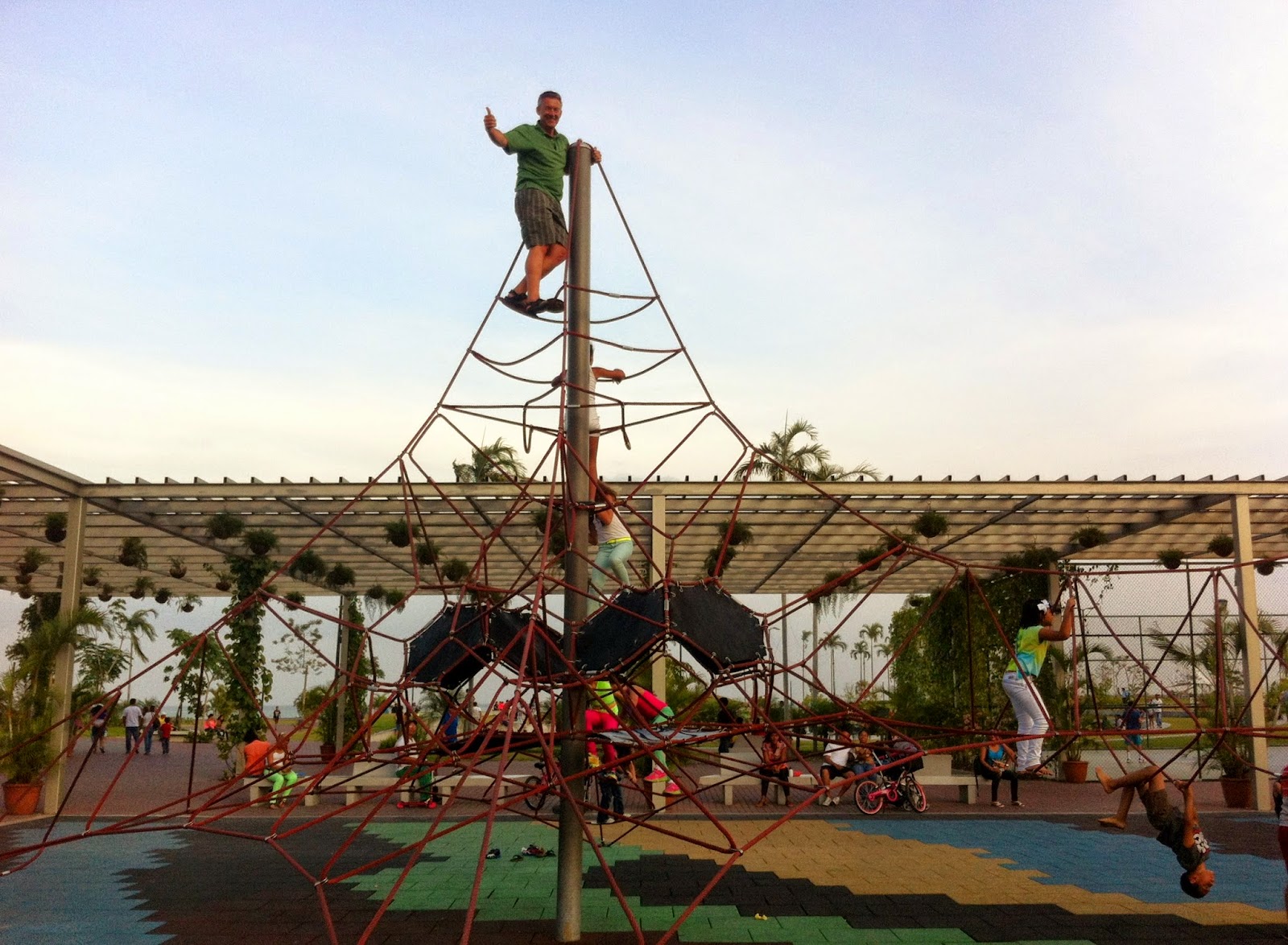
 
And this ...
 
And this!
 

Tuesday, 2 September 2014


GRAN FONDO FORILLON

We’d trained hard for this ride; as hard as we could on the Island, given our relatively flat terrain.  Looking at the course profile for the Gaspé event was enough to scare even the best hill climbers in our group, the venerable Over the Hill Gang: Ira Birt, Richard Birt, Russ Melanson, John MacQuarrie and myself.  The 126 km route featured a total elevation gain of over 2,000 metres and several climbs in the 12% to 16% range.  Organizers billed it as the toughest Gran Fondo in Québec.
On August 16, we rode a course on the Island which took us over every hill in Queens County, including the toughest one, the ride past the Glasgow Hills Golf Course in New Glasgow.  After 130 km of that, we were cooked, but confident we had the endurance to make it to the end of the Gaspé event.  What we couldn’t have prepared for was the weather!
After driving ten hours to get to our luxurious accommodations in Cap-aux-Os, the Motel-Chalets Baie de Gaspé, we walked the short distance down the road to Le Baleinier, a nice little restaurant where we enjoyed a delicious meal.  We made arrangements with the owner to open a little early for us the morning of the Gran Fondo.  Then, we walked back to the motel through the sprinkles.  Shit!  The weather forecast was right.

Next morning, after hoeing into delicious French-style crêpes with maple syrup and scrambled eggs, we squeezed into our seven-passenger van for the short drive to Cap-Bon-Ami, start of the Gran Fondo Forillon.  Nearing the site, we climbed a dizzyingly steep hill, wondering how the hell we were going to get up and down it safely on slick pavement, and parked in a field across from the campground.  We walked from there down to the registration area, getting wetter as we went.  “At least it’s a dry rain”, some idiot remarked.

We dedicated our ride to a well-known member of the Island cycling fraternity, Randy Miles, who is fighting the toughest battle of his life.  I’m sure he’d have given anything to be on the bike with us.  Nothing we would face could compare to what he’s going through.  Besides, as our absent OTHG member, Kent Wood, is fond of saying: “Pain is just a sign of weakness leaving your body”.  I tried to get my head around that thought during the ride, but it didn’t seem to fit, for some reason…
The registration area was abuzz with activity, but there were very few riders around.  Less than 30 had registered for the Gran Fondo; others had opted for the Medio Fondo (82 km) or the Petit Fondo (63 km).  We picked up our kits and slogged back up the hill to get the bikes ready.

While we waited for ride to start, the weather actually cleared enough for us to get a glimpse of the sun and the beautiful surroundings.  The cliffs are magnificent and it’s common to see gannets and other seabirds as well as seals and whales nearby.  Cap-Bon-Ami is at the very tip of the Gaspé Peninsula.  Locals call it “Le bout du monde”, the “End of the World”.  The next land out in the Gulf of Saint Lawrence is Anticosti Island.
 Finally, at 10:00, we were off, climbing the first kilometre or so in the lowest gear we had, wondering what the hell we’d gotten ourselves into.  The faster riders were quickly off the front but, coming down the first steep hill, one of the them hit the curve at the bottom too fast and went down in a pile.  A few metres earlier, and one of the 6 x 6 pressure-treated posts guarding the road might have been the last thing he’d ever see.  When we passed by, he and another rider were on the deck.  We learned later that neither was hurt, but the first guy wrecked his $12,000 bike. 
We settled into a nice rhythm during the first 20 kilometres, riding through the villages of Cap-des-Rosiers and Anse-au-Griffon over fairly flat ground.  The weather seemed to be holding, but it wouldn’t last long.  It was the last dry pavement we’d see the whole day.  By the time we reached the first feeding station at Rivière-au-Renard, the quarter-way point, it was raining hard.  I could barely see through my rain-splattered glasses and had to take them off.  Not long after, we hit a 14% monster and got our first real taste of climbing.  Going down the other side, with wet brakes, slick pavement, and poor visibility made me age a couple of months!
Between there and the half-way point, we climbed another tough hill near l’Anse-à-Valleau in the pouring rain and white-knuckled it down the other side.  The last 15 kilometres before we reached the half-way feeding station at Grand-Étang were not that bad.  The rain had eased a bit and the terrain was flatter.  We met the fast riders about four kilometres from the half-way point, a clear indication that we were not in their league.  And then a young couple on a tandem zipped past us like we were standing still!  Another dose of reality.
The feeding station was located in a National Park picnic area, overlooking the broad expanse of the Saint Lawrence River.  Although the visibility was not the best, there was beauty in the fog, the rugged coastline, the smell of the ocean, and the abundant bird life. 

Fed and watered, we eased our way up a long, shallow climb, a nice break in the action before hitting the big hills in the middle part of the course.  And then the rain started again, not quite as bad as on the way out, but just enough to chill the leaner members of the group.  Me, I’m like the seals we saw lounging along the shore, well insulated thanks to my layer of blubber.

The worst climb on the way back is called La Madeleine, long and steep.  Fortunately, the heavy fog obscured the summit so that it didn’t look so bad from the bottom.  Flying down the other side, squinting to avoid the water and grit rooster-tailing off others’ back wheels, we climbed one more monster before the last feeding station at Rivière-au-Renard.  By this time, we knew we had ‘er beat!
Something out of the ordinary always happens on one of our out-of-province forays.  This time, it was the mysterious and colourful ‘foaming backside’ phenomenon.  Since I’ve been sworn to secrecy and can’t decipher the peculiar chemical properties of Tide cold-water detergent in any case, the reader will have to ask John MacQuarrie for a scientific explanation.

We wheeled along 15 km of false flats at a good pace before re-entering Forillon National Park.  Everything was going well until we hit the wall on the last hill, a short ramp with a 20% slope, followed by another half-kilometre of misery.  I tried to zig-zag up the last part of the ramp, but had to straighten the bike out because I was scared to fall over, my speed was down to a 7 km/hr crawl.  The photo below shows John and I suffering, while our encadreur-expert, Luc Beaudet, is lapping it up!

A park employee yelled that it was the toughest part of the course.  “Thanks, buddy”, as if I didn’t know!  The view from the top was of a perilous descent on wet pavement, followed by a ninety-degree left turn.  I squeezed the brakes as hard as I dared and hoped like hell I wouldn’t wrap myself around a tree on the last bend.  None of us did.  Everyone made it across the finish line safe and sound.
Soaked to the skin, we five drowned rats got our picture taken with Luc and followed our noses to the food.  After burning through 5,000 calories, I could’ve eaten the arsehole off a dead skunk.  We dined al fresco on tasty shrimp, potato salad, salmon mousse and sandwiches, washed down with a local craft beer, Pit Caribou, and a maple syrup-based concoction called Eau d’érable.

The Gran Fondo Forillon ranks as one of the toughest rides of my life.  As with all the others I’ve shared with members of the Over the Hill Gang, it was a triumph of endurance over adversity, rendered much more difficult by the conditions.  You can train for hills, but you can’t train for bad weather. 
Our wet ride was sandwiched between two blue-sky days when we saw the Baie-des-Chaleurs and the Baie-de-Gaspé at their finest.  Although the drive from Campbellton to Cap-aux-Os is a slow one through what seems like one long village, the road winds along beautiful coastline, crosses enticing rivers, and is framed by the rugged mountains of the interior. 

We’re damn lucky to be alive and well, and surrounded by good friends!  I’ll wear the Gran Fondo Forillon jersey with pride.
 

Friday, 22 August 2014

GRANDCHILDREN

 
Elva and I have three grandchildren: Samuel, 7; Natalie, 5; and Lucie, 2.  Over the summer, we welcomed them into our home and got to know them better.  Our son, Jacques, and his daughter, Lucie, spent three weeks with us.  He was joined for the third week by our daughter-in-law, Isabelle.  We looked after Samuel and Natalie for five days while our daughter, Sylvie, and her husband, Ghislain, celebrated their tenth wedding anniversary with a well-deserved second honeymoon.
 
We packed a lot of activity into the brief time we had together, so much so that Elva and I were worn out when the time came to say goodbye!  These images serve as reminders of the special times we spent together.


They are truly a gift!

Monday, 14 July 2014


SAYING GOODBYE

In the space of two weeks, Elva and I each lost a good friend.  Martha Lebel died on June 24 and Ralph Thompson on July 9, both of cancer.  Both were strong, clean-living individuals who took good care of themselves.  They fought the disease to the end and took advantage of every treatment medical science could offer.  If nothing else, this proves there is still much we don’t know about the causes of and treatments for this terrible disease, despite years of research by brilliant minds.
Martha was a true Madeleinienne: devoted partner and mother; good neighbour and friend.  She was kind, generous, fun-loving, gregarious, and tough as nails.  It was nothing for her to swim in the ocean when the water was barely above 15 degrees Celcius.  She loved hiking, camping, cycling, canoeing, and digging bar clams; anything that involved the outdoors.  In her work as a kindergarten teacher, she touched many young lives in a very positive way.


Elva and Martha's many friends will miss her greatly.  Each year, three or four of them would go off on an adventure, either hiking or cycling, and Elva always came back with a ton of pictures and more stories about the fun they’d had together.  Due to her illness, Martha and her husband, Jean-Yves, had to cancel a planned trip to Spain last September where they planned to walk the Camino.  Elva did the walk herself, and dedicated the experience to Martha.
I only knew Ralph Thompson for five years or so.  Ironically, our friendship didn’t get off to a very good start.  In October of 2008 I got a call from the provincial government asking if I’d be interested in working with the Commission on Land Use and Local Governance.  Time passed and, a couple of months later, Ralph and I met to discuss the assignment in his office in Dr. Ellis’ former medical clinic in Hunter River.
It was plain to me that day that Ralph wasn’t sure he’d be needing any help with the task he’d been given.  Especially not from a guy he’d never met before and knew little about.  And I could tell he was measuring me as we spoke.  Although I did my best to make a good first impression, it was like playing cards with a very good poker player.  He was very hard to read!
Long story short, I got the job!  Our little team of Ralph, Debbie Gillespie and I spent the better part of a year together before the Commission’s final report was released in January 2010.  Ralph was a great guy to work with.  He had his strengths and I had mine, and we complemented one another very well.
When government appointed Ralph to head the Commission on Land Use and Local Governance, it should have known what to expect.  Ralph was not only a wise and learned man possessed of a great knowledge of the Island and its people, he was also a straight shooter.  I’ve heard it said that the first rule of the courtroom lawyer is to know the answer to a question before asking it.  So Ralph's findings should have come as no surprise.
More than four years have passed since the report was released, and the provincial government has little it can point to in the form of progress on the key recommendations.  I know this was a source of some disappointment to Ralph.  He felt, and rightly so, that the time had come for change in the way we approach development on this Island and in the way people made important decisions about their communities.  He also felt, and rightly so, that the changes he recommended were both reasonable and practical.
Ralph loved to tell stories.  He’d come into my office in Hunter River at least once a day and ask: “Did I ever tell you about the time…?”  And off he’d go.  Sometimes it was a story about practising law in Charlottetown and the interesting characters he met there.  Other times it was about a case he’d heard.  And he even told the odd joke.  He wasn’t half bad at it either; providing you had the time … and the patience … to wait for the punch line.  Nobody ever accused Ralph of being a fast talker!
As he spoke about his time on the bench, it was clear to me that Ralph considered this the highlight of his career.  His sense of fairness came through loud and clear, as did his concern for those members of Island society who hadn’t had the same chance at life that he had.  Before passing judgement or imposing a sentence, I’m sure Ralph would have placed himself in the other person’s shoes.
Ralph was a country boy at heart.  He loved everything about farming and he had a great respect for those who make their living from the land.  Ralph loved his horses and he loved spending time in the saddle.  Myself, I’ve never ridden a horse I couldn’t fall off of.  But I do understand the attraction.  The horses on Ralph and Karen’s farm were beautiful and intelligent animals; well bred, well cared for, and well trained.  Through his vivid descriptions of their personalities, he made them seem almost human.
Ralph was an avid and accomplished sailor.  He spoke often about trips he and Karen took over the years and, as he did, his face would light up.  He treasured the feeling of freedom, independence and adventure that only a sailboat experience can provide.  Elva and I spent a memorable afternoon on Ralph and Karen’s sailboat.
My friend was first and foremost a family man: a father, grandfather and loving partner.  He spoke of his love for his children and his grandchildren, and how proud he was of their accomplishments.  He spoke of the wonderful years he and Karen spent together, working as a team in everything they did.

As he fought his illness, Ralph taught me about courage, the importance of a positive attitude and, in the end, about acceptance.  I admire his great strength.  Karen was his rock; forever supportive and always welcoming when Elva and I visited.

Although Ralph and I come from very different backgrounds — his being English Protestant and mine Acadian Catholic — we shared the same values and had the same opinions on many issues, including politics.  I found him to be very open-minded about things and very modern in his thinking.  Most of all, we shared a great love for this Island, for the land, and for the people that make it such a wonderful place to live.
A couple of years ago, Ralph and Karen bought a convertible, a Mazda MX-5, just like the one my wife, Elva, owns.  Last summer, we went for a drive together through central Prince County.  It reminded us once again that we live in one of the most beautiful places on this Earth.  We drove along the shore of Malpeque Bay, stopped to visit Saint Patrick’s Church in Grand River and made our way to Milligan’s Wharf.  We visited Elaine and Léonce Arsenault’s antique store in Richmond and went past Elva’s home place in Egmont Bay.
As Ralph and I drove along behind Karen and Elva, he leaned over to me and said: “See those two nice-looking blondes in the car in front of us?  Why don’t we follow them for awhile and see where they go.  Maybe we can strike up a conversation when they pull over.”  I felt the same way.  It was one of those special days I’ll never forget and can only wish we could experience again.
Not long before he passed away, I visited Ralph in the hospital.  We happened to be alone that day, just the two of us.  After the usual back and forth about the weather and how the crops were doing, he asked me if I’d consider saying a few words at his funeral service.  I answered that, of course, I would.  I said I’d be honoured to do so.
“But Ralph”, I added, “there are so many people who’ve known you far longer than I have.”  He answered: “It’s not how long you’ve known a person; it’s how well that counts.  You and I are kindred spirits, J-P.”  I’ll never forget those words.  

Good friends are hard to find and harder to say goodbye to when the time comes.
 

Tuesday, 24 June 2014


BACK TO NATURE

From an early age, and into my early twenties, I spent a great deal of time outdoors, exploring the woods and streams around Wellington, sometimes as a hunter, other times as a fisherman.  When family and career intervened, I set these pastimes aside.  Now retired, I’m free to indulge in my passion for the outdoors once again.  While hunting is not part of my plan, fishing definitely is.
My knowledge of angling on the Island has been limited to what I knew about the Grand, or Ellis, River in Central Prince.  It flowed past my childhood home and provided my friends and I with many recreational opportunities.  We swam in it; fished it; rode ice cakes on it; skated and played hockey on it; and even fell in it a few times!
As a long-time resident of Charlottetown, I decided this was the year to discover new rivers and ponds.  In the course of my exploration, I rediscovered my love of the outdoors.  And I became acquainted with areas of the province I knew existed but that surprised me.  Why?  Because, even on this densely-populated island, there are places where one can “get away”: where there is only the sound and sight of the river and the wildlife; the fresh smell of nature; and where the smart phone shows “no signal”.
I’ve decided to focus on photos rather than text in this blog because I want to share with my readers some images of the wonderful places I’ve visited over the past month or so.
The first is the Morell River.  It's protected by law through what's known as a 'conservation zone', a strip of land on both sides that acts as a buffer between the river and adjoining land uses.  Activities within this buffer zone are severely restricted, resulting in a river that is as pristine as can be found on the Island. 
 
Next is the Rivière à Charles, also known as the Haldimand River, a little-known watershed that flows into Egmont Bay.  I walked toward the headwaters of the river through an extensive salt marsh and found this little gem.  Like on the Morell, I was completely alone, and as far away from settlement as is possible here.  I heard an owl calling and watched a bald eagle soar overhead.  It was so peaceful that I didn't mind not catching any fish and fighting off millions of mosquitoes.
 
This year, I joined the Haviland Club in Charlottetown.  With membership comes the right to fish in a private pond, called Officers Pond, located on the Winter River in Suffolk, just east of Charlottetown.  I fished there one morning and watched the sun rise.  It was spectacular!
 

Finally, I've been exploring the West River, upstream from the bridge at Bonshaw.  Like the Morell, it's quite well protected by a buffer zone and has benefited greatly from the work of the local watershed association.  They've cleaned out obstructions in the stream to improve water flow and have planted trees to provide cover.  It's only a twenty-minute drive from Charlottetown and the walking trails make for easy access.
 
 
As I walk these rivers, fly rod in hand, up to my waist in crystal-clear water, I wonder whether getting back to nature is the pretext for fishing, or whether it's the other way around.  One thing I know for sure, every time I'm outdoors I remind myself that it's part of my reward for a thirty-nine year career well spent.  Retirement is starting to get the better of me!

Thursday, 22 May 2014


ON ROOTS AND CULTURAL IDENTITY

One of the subjects I like to raise with strangers when I meet them is their ancestry.  If I hear a last name that sounds Polish, for example, I’ll ask whether I’ve got it right.  If the person is Canadian, I’ll ask how many generations the family has been in this country.  In Europe, I wanted to know why the Serbs had it in for the Croats and vice versa, and why the Turks and the Greeks had such a hate on for one another.  People gritted their teeth and gave me the best explanations they could.  While in Central America I met many locals, tour guides for example, and asked them about their ancestry.  I received all manner of answers, ranging from “I don’t know!” — which I took to mean “I don’t much care!” — to a comprehensive history lesson about the Maya.
My own roots are decidedly Acadian.  I’ve traced the ancestral lines of my eight great-grandparents.  The first of their ancestors to arrive in Nouvelle France were: Pierre Arsenault, Jean Pitre, Michel Haché dit Gallant, François Blanchard, Jean Gaudet, Pierre LeClair, Robert Cormier, and Antoine Bourque.  The only one who wasn’t French was Jean (Benèque) Pitre, born around 1636, and of either Flemish or English origin.  The women who married seven of these eight men, Marie Guérin, Marie Pesseley, Anne Cormier, Marguerite Caret, Rose Belliveau, Marie Péraud, and Antoinette Landry were of French ancestry.  We don’t know the name of Jean Gaudet’s first wife, the mother of my direct ancestor, but it’s safe to assume she was French also.

Growing up in an English-French community like Wellington, I considered my Acadian identity confusing at best and, at worst, a negative attribute.  Those who spoke English with a French accent were made fun of by English playmates that, ironically, could hardly put three English words together themselves.  In turn, we mocked our classmates at École régionale Évangéline who’d had little occasion to speak English before high school.  Having a mastery of English at that age made me feel superior.
I was fortunate to hear English spoken around me at a very young age, and was fluent in both languages by the time I started school.  One day, when I was about five, I visited two neighbour boys who happened to be English.  Back home, I walked in the door and announced triumphantly that I’d learned new English words: “Goddamn” and “Jesus Christ”.  My mother and grandmother were not impressed!
All through elementary and high school, I much preferred English subjects to French.  After five years at École régionale Évangéline, my spoken and written French remained at a very basic level, just enough to get me by in my own community.  I chose to attend an English university in Fredericton, partly because I had no interest in studying in French. 
Acquaintances began calling me “J-P”, simply out of convenience, and because many of us had nicknames.  Early in my career, I tried to use my given name but soon tired of being called “John Paul” or worse, “Gene Paul”, by English people who wouldn’t even try to pronounce it correctly.  None of this did anything to strengthen my Acadian identity.
 
Four life events changed all that.  The first was a concert Elva and I attended at the Confederation Centre of the Arts, probably in 1978.  We had returned to the Island after a two-year stint in Toronto and had heard that Angèle Arsenault and Les danseurs Évangéline would be performing on the Centre’s main stage theatre.  I didn’t know quite what to expect but decided to attend out of curiosity.
I’ll never forget walking towards the Centre and seeing École régionale Évangéline school buses lined up nose-to-tail in front of the Queen Street entrance.  Inside, people from my home community milled about in the entrance foyer, many of them wide-eyed in amazement at the grandeur of the place, most of them in the Centre for the first time in their lives.  I got caught up in the buzz and looked forward to the concert.
Angèle was a big star, almost too big for us to call our own, but well-suited to the Centre’s main stage.  I remember her giving a fine performance; it’s what we expected.  But when Les danseurs Évangéline, a group of young people de par chez-nous bounded onto the stage, there was a noticeable change in the audience reaction.  The fiddles played our tunes, our toes started tapping, and we saw the old familiar dance steps being performed.  You could feel a sense of pride, wonderment and sheer joy emanating from family members and friends.  Needless to say, the dancers earned deafening applause and a standing ovation.
I got caught up in the atmosphere, and I still get goose-bumps from the memory of that magical night.  For the first time, the Confederation Centre of the Arts belonged to us.  Our own were good enough to be on the main stage!  I consider this single event to be the genesis of my Acadian identity.
The second key life event was the first annual meeting I attended of La Société Saint-Thomas d’Aquin, the province’s Acadian and Francophone organization, in 1979.  At the time, I was very much opposed to a radical political element within the SSTA that advocated a confrontational approach as the way to promote the French language and culture.  I was named to the Board of the SSTA in 1979 and became its President in 1987.  For twenty-five years, I was a director of provincial, regional and national organizations that promoted French language and culture.  These experiences contributed greatly to my understanding of the history of my people and encouraged me to improve my spoken and written French.
The third was my discovery of Acadian history through researching family genealogy.  As an only child raised in a single-parent family, I became curious to know where I’d come from.  Although it took me several years, I managed to piece together my eight family trees.  Along the way, I learned much about my people’s triumphs and struggles, and became especially fascinated by how each of these families made it through the terrible years of the Deportation, the 1750s and 1760s.
The fourth key event in my life was having children.  Without a doubt, this is the most important thing that’s ever happened to me.  With the help of my life partner, Elva, I raised three beautiful children: Sylvie, Clément and Jacques.  I give Elva and her wonderful family much of the credit for instilling in them a strong dose of the essential Acadian identity at a young age.
Although each of them may express it in a different way, it’s an important part of who they are.  My children have given me many examples of how personality traits and values associated with the Acadian identity have influenced their lives in the workplace and elsewhere in a positive way.  The best of these are the strong work ethic, the ability to seek and find compromise, the ability to work with others, and the Acadian sense of humour.
I believe in genetic memory, also called racial memory, defined in psychological terms as memories, feelings and ideas inherited from our ancestors as part of a “collective unconscious”.  We’re all born with genetic memory.  Some of us choose to seek it out and learn from it; others don’t.  I’m the sum of the genes of all of my Acadian ancestors.  I therefore believe I can better understand myself by getting to know them.
I shudder to think of where I’d be today if I hadn’t discovered my roots, listened to what my ancestors were telling me, and nourished my Acadian identity.  As I enter my seventh decade, the foundation is stronger than ever although, as always, I have a foot in each of two worlds: French and English.  I’ve tried to adopt the strongest elements of both cultures and I’m thankful to be able to live in a country that favours this.  While my Acadian identity was slow to take root, my voyage of self-discovery has served me well and I’m a better person for it.

Monday, 5 May 2014


FREE-RANGE KIDS

Several years ago, while working on a consulting project in the Ottawa area, I sat in the concourse of an office building complex eating my lunch.  Out of the corner of my eye, I noticed a group of pre-schoolers walking through the concourse with their adult supervisors.  I actually heard them before I saw them.  My jaw dropped when I noticed they were tethered like a team of sled dogs, their wrists tied to a rope that held them all together.
The previous weekend, Elva and I had visited our niece, Dominique, and nephews Denis and Miguel, who lived in a rural area of Prince Edward Island.  Their father kept several breeds of poultry, a dog, and many cats, and their huge yard featured a garden, an orchard, outbuildings, and place for a treehouse.  As I sat there hoping my eyes were playing tricks on me, I was struck by the contrast between the poor little creatures I was looking at and my niece and nephews, and it reminded me of how child rearing has changed since I grew up in Wellington.

My friends and I swam unsupervised in the Ellis River and Barlow’s Pond; we climbed trees and built forts in the woods; we made fires; we built tunnels from hay bales in Agno’s loft; we tunnelled into snow banks behind Cliff’s barn; we skated on the sewage lagoon on ice that was too thin; and we climbed onto boxcars in the rail yard when we weren’t supposed to.  We even built a zip line once using a rope tied between two trees.  Yes, I fell many times and, yes, I got hurt.  So did others.  But it never stopped us, and our parents allowed us our freedom.  We were having too much fun!
At Easter, Elva and I visited our grandchildren, Samuel and Natalie.  They live with their parents in a semi-rural area of Saint John in a small subdivision on a dead-end street, surrounded by forest.  Old enough now to play outside by themselves, they have the run of their spacious yard.  They clamber on their gym set, ride their bikes, skateboards and scooters, and even climb the odd tree.  Samuel is old enough to make a fire from a pile of leaves, using a magnifying glass; just like my cousin, Aubrey, taught me to do when I was Samuel’s age.  Before long, he’ll be burning his name into the front step!  I loved watching them explore their world.
Last week, Jacques and Isabelle sent us a video of our granddaughter, Lucie, climbing on playground equipment in a park in Edmonton.  She’ll be two later this month and is well on her way to becoming a free-range kid as well, just like Pépé Jean-Paul and Mémé Elva were in our youth.
On my way home from Saint John, I listened to CBC interview the principal of a school in Auckland, New Zealand on Anna Maria Tremonti’s program, The Current http://www.cbc.ca/thecurrent/episode/2014/04/21/playing/   Bruce McLachlan explained what happened at Auckland’s Westlake Primary School when they decided to ban playground rules.  Amazing things in fact: a decline in rates of bullying, injuries and vandalism, as well as an increase in students’ concentration during class.  Students flourished happily in their new-found freedom.

Getting rid of traditional health and safety-based playground rules meant that students at the school could climb trees, ride skateboards, and play all kinds of games during recess.  They were also allowed to play in a “loose parts pit” containing junk pieces such as wood, old tires, and an old fire hose.  Principal McLachlan was asked to explain how banning playground rules led to a reduction in bullying.  His answer: “The kids are too busy to even think about bullying.  They’re not bored anymore.”  They also discovered that children were so occupied with the activities that the school did not need its timeout area anymore or as many teachers patrolling the playground.
The prestigious Economist magazine published an article on the subject this past January.  Here are several excerpts:
Thanks to helicopter parents and armies of lawyers, today’s primary-school children lead more risk-averse but less science-rich lives.  Playtimes are heavily supervised interludes of restricted play on health-and-safety-approved equipment, hurriedly cancelled if something terrible—say, a light rain shower—threatens. Unsurprisingly, many kids get bored, which means fights, bullying, vandalism and worse.  Not for nothing are today’s playtimes so tightly controlled.
Researchers expect kids taking part in the [Auckland] project will be better able to handle risk when they’re older, when more is at stake.  Better to discover the pain of a bike mishap at age 6 than a car crash at age 16.
Parents don’t sue in New Zealand; in America and Australia they do nothing but. Since many current parents were cossetted when young, there are at least two generations of “bubble-wrapped” kids to pop before the dream of free-range schooling can come true.
I think we’ve become over-protective of our kids, and I say this even with the experience of almost having lost a child to drowning.  Our daughter, Sylvie, fell into the river that ran alongside our yard when she was just short of her fourth birthday.  Had it not been for the quick action of our neighbor, Diane Bouchard, she might not be with us today.  It just wasn’t her time.
Needless to say, Elva and I learned a valuable lesson, but it didn’t cause us to over-protect our children.  In fact, I savour the moments when my now-adult children confess to childhood pranks previously unknown to us, many of them involving considerable risk.  I truly believe they learned about risk at a very young age.  I hope we gave them enough freedom to explore.
And so, I wonder how those poor little creatures I saw in the concourse of the mall in Ottawa that day are coming along in their intellectual and physical development.  Do their parents let them ride their bikes on neighbourhood streets?  Do they let them climb trees?  Do they give them the freedom to take risks?  Do they even let them out of the house alone?

I’m thankful that I was raised during a time when kids could be kids, and unstructured play was the way of our world.

As everyone knows, when children reach their teenage years, the risks are multiplied considerably.  As we say in French: Petits enfants, petits problèmes; grands enfants, gros problèmes!  Raising children is the most important responsibility given to parents.  Giving them the tools and strategies they need to survive is time well spent.  But a degree of freedom is essential.  And the sooner the better!