Sunday, 7 July 2019


ON BEING A GRANDFATHER

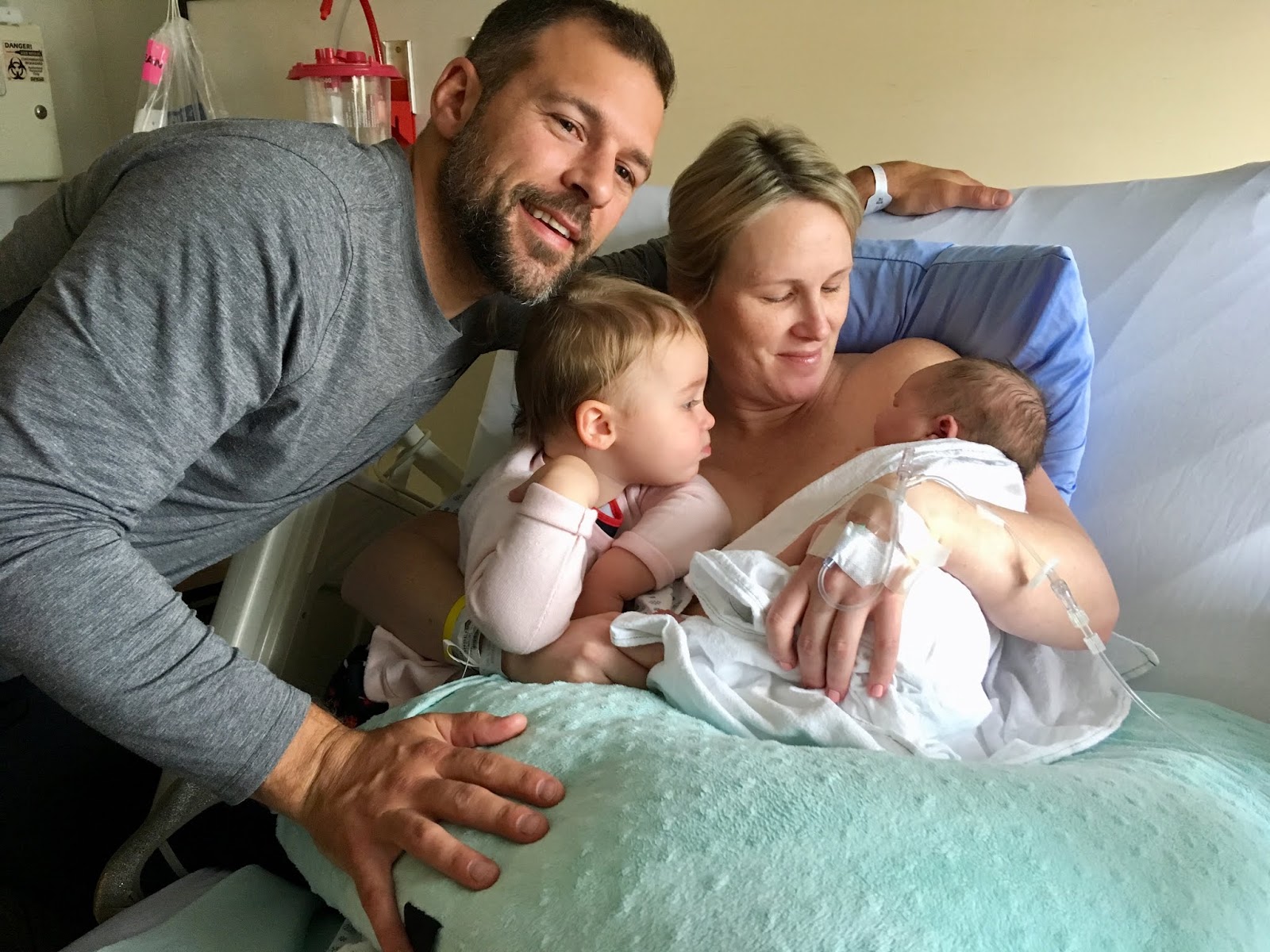
I went fishing on July 2, the day André Campbell Arsenault was born to Julia and Clément in Edmonton, Alberta. It was my way of celebrating the marvel of new life and, in a sense, to close the loop. There is no better setting in which to contemplate the meaning of life than standing waist-deep in a fast-flowing stream, surrounded by nature. On June 11, 1980, the day our eldest, Sylvie, was born, I went fishing on Barlow’s Pond in Wellington and came home with a nice feed of trout. This time, I let the fish go. Maybe it was my way of giving thanks.

Growing up as the only child in a single-parent family, I was ill-prepared for fatherhood. Fortunately, I partnered with someone who’d grown up in a large family, the second-oldest of eight. Elva’s family taught me how a real family functioned; the good times and the hard times. She’d learned how to look after the little ones, to play with them, and to change their diapers. I hadn’t! As the youngest of my first cousins living in Wellington, I was always the baby of the group.

Yet the urge to have a family of my own was always there. Four years after we married, Elva and I decided the time had come to go from two to three. She didn’t want to be pregnant during the summer and she didn’t want to miss a significant part of the school year. (These were the days before paid parental leave, remember) Do the math! The pressure was on to conceive in September and we made it happen. Sylvie was born two weeks before the end of semester, a healthy and beautiful baby girl. We’d moved to Wellington in the fall of 1979 and prepared a room in the old family home just for her. Clément followed two years later and Jacques in 1984, all spring babies. (Remember, Elva didn’t want to be pregnant during the heat of the summer! And she usually has her way…)

We’d decided that Elva would put her teaching career on hold until our youngest started school. I commuted two hours each day to Charlottetown for nine years, often arriving home exhausted, sometimes in the middle of a snowstorm. Elva played the role of primary caregiver and I that of breadwinner. It was the norm for our parents’ generation and not uncommon for ours. In the interest of advancing my own career and our family’s prospects, I uprooted my young family and moved to Québec City for two years to complete an MBA. It was a difficult adjustment for all of us but it paid off eventually.

I wish I’d been more involved as a parent when my own children were younger. Perhaps not knowing my own father and not having siblings affected my ability to do so. There are certainly things I wish I could do over. Not remorse, just regret.

I cycled up Mont Ventoux, a punishing 21-kilometre climb, on October 17, 2006 with four of my buddies. Back down, I called Sylvie from Malaucène at the foot of the Provençal mountain to see how she was doing. The next day, our first grandchild, Samuel Gallant, was born. Two years later, Sylvie and Ghislain welcomed Natalie into their family. Lucie was born in Edmonton on May 26, 2012 to Isabelle and Jacques. Finally, after years of wanting a child, Julia and Clément were rewarded with Estelle, born November 1, 2017, the closest thing to a miracle I’ve experienced in my life. And now André, a healthy boy — “10, 10, 2 and 1” as the nurses say!

I watch my grandchildren’s fathers — Ghislain, Clément and Jacques — raise their children and wonder how they learned to do it so well. Parenting seems to have come so naturally to them, and I couldn’t be prouder. They’re so much better with babies than I was. All three changed diapers and got up during the night; rocked babies to sleep and gave them their baths. Ghislain is very involved in Samuel and Natalie's lives. Jacques was Lucie’s primary caregiver before she started school. Clément is with Estelle from the time he gets home from work until he drops her off to daycare the next morning.

From just the two of us, Elva and I have seen our family grow to thirteen. The mere thought of it astounds me. We did our best to pass along strong moral standards to our three children. We’re thankful that our five grandchildren will speak French to us and hope they’ll learn more than two languages. We love their French names.

Admittedly, this a male perspective, written by an aging baby-boomer. I know how fortunate I was to have been raised by a strong, independent woman and to have been influenced positively by strong female role models during my formative years. My five grandchildren will know the love of their fathers and I know it will serve them well as they grow into manhood.

The need to pass on one’s genes is a primal and a powerful urge. In this age of political correctness and respect for all orientations, one might wish to suppress it or, at least, not admit it’s there. But not me. I know my life is more complete because of my family. And I’m a better person because of the life lessons fatherhood has taught me. I love being a father and a grandfather and I hope, someday, to hold great-grandchildren in my lap.

These random thoughts would be incomplete without pictures of the grand-kids, n’est-ce-pas? Here are some of my favourites.

Samuel and Natalie


Lucie
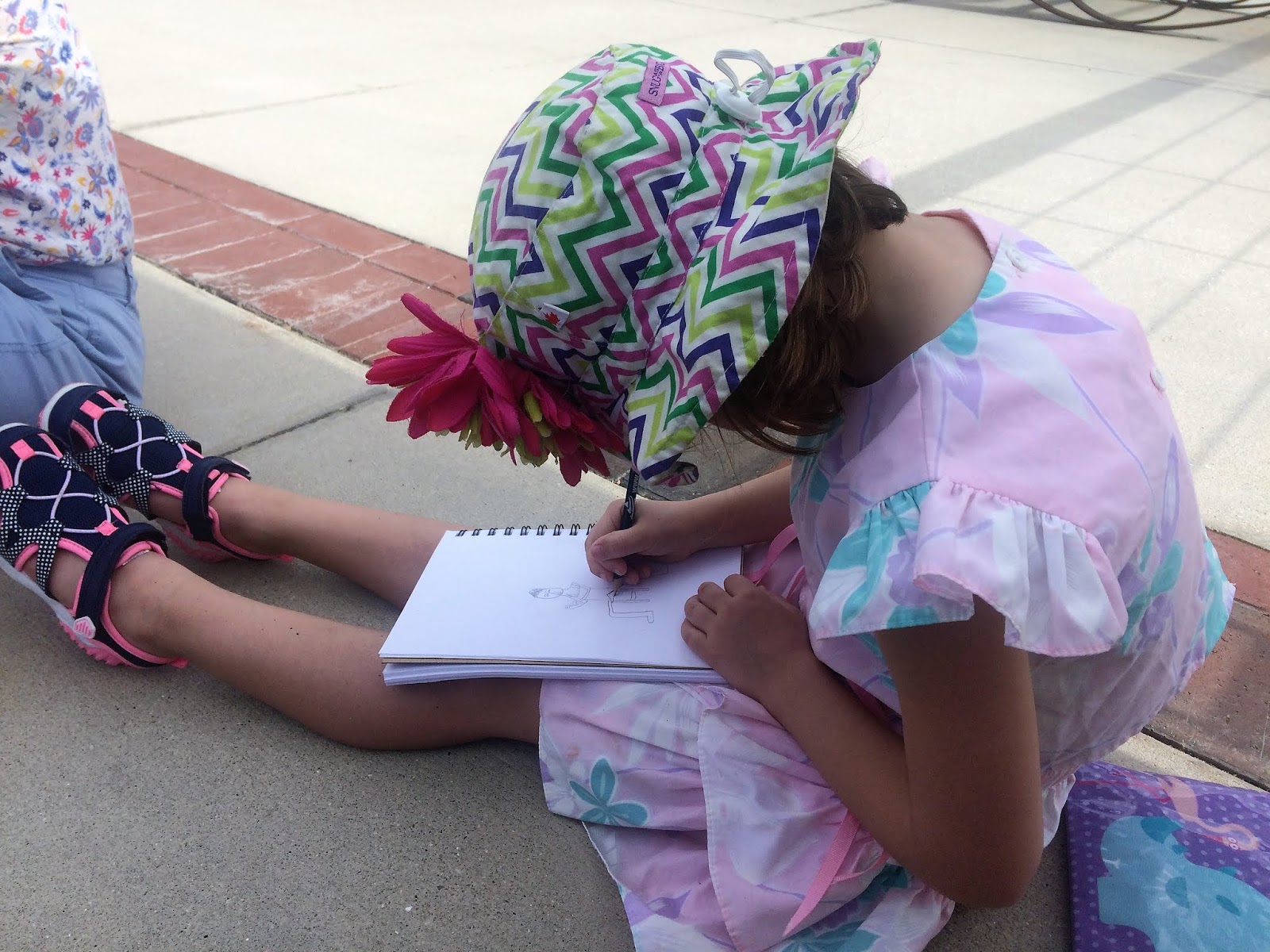

Estelle and André


Sunday, 27 January 2019


ON BECOMING A SNOWBIRD

One of my retirement goals is to never have to buy snow tires again! Yes, I like to keep my life ambitions simple and modest. Always have. But, where to spend the winters? I remember looking at a map of the world before I retired and reading up about where people who live in the northern hemisphere go to escape the cold.

Europe seemed like a good option. But online temperature stats for the months of January, February and March didn’t look too promising, except for some of the Mediterranean islands. We took a cruise there in the fall of 2013, my first retirement trip, but didn’t find what we were looking for. We visited friends who wintered in Mexico, near Cancun. It’s a beautiful area but we’d have had no car and our favourite fitness pastime, cycling, would not have been an option. None of the six countries we toured in Central America fit the bill either. Arizona? Maybe, but we’d miss the ocean.

And so, it came down to Florida. Pros: accessible by car; cycling opportunities; beaches; accommodation options; weather. Cons: traffic; exchange rate; finding suitable rentals each year; the American way of life. In 2016, we took the plunge and rented a condo for the month of January. In 2017 and 2018, our stays grew to six weeks and, for 2019, we booked the same condo for two months, January and February. Last August, I received a text from the condo owner out of the blue advising that she’d changed her mind. No explanation! Back to square one! Try and find a place to rent four months out? Not an easy task.

Long story short, we’re staying in a mobile home park called Poinsettia, a nice place with a community feel to it, and home to very friendly people. The location is excellent. Residents are solidly blue-collar, not snobbish like the condo crowd. While our unit is very dated, we’ve gotten used to the place and remind ourselves every day how lucky we are to be able to escape the worst of an Island winter. We plan to return here in 2020, in a nicer unit hopefully.

Any place is what you make of it; a positive attitude and an open mind go a long way. Elva and I ride three or four times a week with our cycling group, the Caloosa Riders Bicycle Club. Rides take place almost every day and we choose a group according to ride speed. The terrain is dead flat and winds are usually moderate. Traffic is an issue for sure, but you’re either comfortable riding on the road or you’re not. We are. 

We absolutely love downtown Fort Myers. Older buildings have been lovingly restored, much like they have in Charlottetown. There’s something going on every weekend: bike show, art show, car show, food festival, music festival, etc. Twenty-three metal sculptures by the Columbian artist Edgardo Carmona are displayed throughout the downtown area and they attract a great deal of attention. We spend a day on Fort Myers Beach every week and we take in a movie at least once a week. Life is good!


We’ve met many people in Fort Myers and some have become good friends — Canadians and Americans both. I’ve discovered that a key to fitting in here is to purposefully avoid four topics: politics, religion, gun control, and health care. Most Americans we’ve met know very little about Canada, and what they do believe is often tainted or outright false. As a result, it’s difficult to have an informed two-way conversation on these topics.

To illustrate, a cyclist I met for the first time began our conversation by asking me where I was from. He said that his daughter had done post-graduate work at UBC. “The school was fine,” he said, “but she didn’t like Canada”. “Oh!”, I replied. “No, she couldn’t carry [a concealed handgun] and didn’t feel safe there.” What do you say to that? Last week, I came upon two of my cycling buddies I’d wrongly assumed were Trump supporters. They both looked at me, shook their heads, and said how disappointed they were with how their leaders were behaving. These are sensitive times in America, and Americans are divided on many important issues.

I hold strong opinions on the four topics mentioned but keep them to myself. When someone tries to draw me into a conversation, I politely decline, saying only that I’m a visitor and that we enjoy spending time here.

When it comes to the television news outlets, it’s all Trump all the time! CNN is anti-Trump, Fox News is pro-Trump, and MSNBC falls somewhere in the middle. I distinctly remember turning in at 11:00 pm on November 8, 2016, secure in the knowledge that Hillary Clinton would succeed Barack Obama as President of the United States. The silver-haired CNN genius, John King, had guided viewers through a seemingly inexhaustible series of impressive electoral maps, declaring definitively that “There is no path to victory” for Donald Trump. I slept well knowing that. We all know what happened the next morning!

And so, we watch the circus unfold every day. The same talking heads that predicted a Clinton victory explain how the noose is tightening around the Trump team. (I’d have fired every friggin’ one of them after the 2016 election.) The Mueller Inquiry indicts yet another campaign insider and the talking heads smell blood. “This time, they’ve got him”, they hint. Trump manoeuvres and creates yet another diversion: régime change in Venezuela; peace talks with the Taliban; withdrawal of US troops from Syria; new hope for a trade deal with China; a second summit with Kim Jong-Un. We watch as the wily Nancy Pelosi teaches The Donald a hard lesson about the realities of governing the world’s most powerful nation. He sticks to his plan to build The Wall and to have poor Mexico pay for it! Yes indeed, truth is stranger than fiction.

We’ve created a bubble for ourselves, a place to spend a few months each year. It may not be luxurious but it’s home for now. The internet makes it much easier to stay in touch: to read La Voix acadienne and The Guardian; watch Compass; FaceTime with friends and family; and even watch Netflix. We have each other, warm days, and lots to do. It is indeed true that home is where the heart is!


Thursday, 27 September 2018


GRAN FONDO BAIE-SAINTE-MARIE

“ES-TU PARÉ?”

We leave home in a driving rain storm and roll along Highway 102, watching the weather turn for the better, hoping it will hold for the next day’s Gran Fondo, third in a row for Elva and I. The Annapolis Valley has had a hold on me since my first visit in 1978. The sight of ripening fruit in heavily-laden orchards is evidence of the bounty of nature and the hard work of those who farm the land. My genetic memory is triggered as we drive past Grand-Pré, home of the National Historic Site, and Port-Royal where my Gaudet ancestors first settled in the 1600s.
The drive through North Weymouth and into the village proper offers picture-postcard views and we welcome the familiar sight of the Goodwin Hotel, our chosen lodging for the night. As always, Pat is there to greet us. “I’ve been doing this for forty-seven and a half years,” she tells us proudly. (Even the wifi remembered us!). She describes the recent terrible fire that destroyed a historic building just across the street, nearly taking the Goodwin with it. What a treat it is to stay in a hotel that’s remained essentially unchanged for 130 years, so different from the seen-one-seen-em-all accommodations that dot the modern landscape. “I gave you the same room as last year. The best one in the hotel,” Pat says. “See you for breakfast at 6:00 am then.” 

Still dark when we sit in the dining room. Check out the tin ceiling.
Gran Fondo registration seems busier than last year’s. No wonder! Over 1,000 riders have pre-registered for the event. I look at the board listing where people are from: 400 or so from Halifax; 22 from Prince Edward Island; all 10 provinces represented; 11 states and the District of Columbia; and Australia, Great Britain, Germany and Austria. Word of the event has spread far beyond La Baie-Sainte-Marie.

Volunteers are everywhere! All of them offer you a smile and seem genuinely to enjoy what they’re doing. Pride in the event and the community shines through. Elva and I eat our fricot and talk to people sitting at our table. Two women are from Vancouver. Another is from Richmond, B.C. She introduces us to her friends from four U.S. states, high school buddies where they grew up in the Philippines. “I’m doing the Medio tomorrow, but we really came for the lobster,” she admits. The ambiance is joyful, made special by local musicians and step-dancers, and Acadian cuisine.
The sun shines brightly as we make our way to the starting line the next morning. It’s a cool 7 degrees C but it’s dead calm. A cyclist’s dream. Dozens of volunteers are there to help you park and offer pre-ride refreshments. Vehicles pour into the parking area, some with high-end gear, others carrying Canadian Tire specials. One guy rides past on a fancy time-trial bike, dressed for Arctic conditions, right down to the face mask!
Elva insisted on getting her picture taken with mascot Al-Fondo.
The starting area is empty when we arrive but it soon fills to bursting. The excitement grows as 8:30 approaches. The 160-km riders are sent off and I say goodbye to Elva before lining up with the Gran Fondo group, ready to start my 117-km trek. I greet several fellow Islanders in the marshaling area, wishing them a safe ride. And then we’re off, a gaggle of cyclists funneling through the start-finish line and onto Highway 1.


I make my way up to a couple of Charlottetown acquaintances, Dwayne Doucette and Tom Crowell, and we ride together for a few kilometers, sorting ourselves into a group. An experienced paceline rider like me searches for allies willing to keep a civilized pace and take a turn on the front. I take mine and bridge across to a very strong rider, catching him before we pass the massive church of Pointe-de-l’Église. He leads us to the turnoff at Saint-Bernard and the three Islanders take turns as we roll along Highway 340 through Ohio and Weaver Settlement. Although the ride includes only 500 metres or so of climbing, the hills through Havelock and New Tusket prove a bit of a test. We’re joined by a group of ten or so riders doing the 160-km Super Gran Fondo; they stay with us to the turnoff at Corberrie Catholic Church.

The stretch of road from Corberrie to Concession is one of my favourites: tree-lined, smooth, gently-rolling. We take the sharp left turn at the rest stop in front of La Shoppe Verte and roll past Lac Innocent. After taking another sharp left onto the Saulnierville Road and a right onto the Bangor Road, we mingle with riders doing the 30-km Piccolo Fondo. Some walk their bikes up the steep hills. I admire them, knowing they’re working every bit as hard as I am. As we pass the old Bangor Sawmill, people line the road, ringing cowbells and waving Acadian flags. I see the sign for Saulnierville Station and sing Kenneth Saulnier’s song, M’en allant par Saulnierville Station, in my head for the rest of the ride.
We ride in a group of six or so until we hit the Division Road. I look around and we’re down to two, myself and Rob Bonney from Bridgewater. We turn in to the rest stop at École-Stella-Maris and take on food and drink for the last 30-km stretch. I see a couple of riders speed by the rest stop and try to catch them. Rob and I ride at a steady pace and bridge across to Charles Leonard and François Gazzano, two riders we’d been with before, and the four of us take turns at the front. The pace is quite fast but my legs are feeling pretty good.

I climb the hill at Mavillette, my undoing last year, still with the group of four, and we turn onto the John Doucette Road, descending, the beautiful Mavillette Beach off to our left. Back onto Highway 1, Rob and I lose contact with the two stronger riders. With about 20 km to go, I get down on the aero bars and start emptying the tank. My back is killing me and the lower position helps. Aided by a slight three-quarter tailwind, I roll into Meteghan and onto flatter ground, tailor-made for an old time-trialer. People watch as I roll past but I’m focused only on the finish line. I can see Leonard and Gozzano but know I won’t catch them. I welcome the sight of Sacré-Cœur Church, knowing it’s all downhill from there. I pass one last Gran Fondo rider just before the finish line and breathe a sigh of relief as I hear my name on the loudspeaker: “Jean-Paul Arsenault de Charlottetown”.
Elva is there to greet me and tell me she had a great ride. I wait for Rob Bonney to cross the line, followed shortly after by Dwayne Doucette and Tom Crowell. I thank them for sharing the load. Elva and I talk with Charles and Giselle Duguay from Charlottetown, remarking on how this place feels like everywhere else in l’Acadie, warm, welcoming, proud, and full of life. We load the bikes and the rest of our stuff and make our way to the lobster tent, tired but starving. It’s the best lobster we’ve had this year. And we earned it!


There are many Gran Fondos, but none quite like this one. My Prince Edward Island cycling companions and I rode the Marco Pantani Gran Fondo in Cesenatico, Italy, on September 2. It was a challenging ride featuring a couple of very tough climbs but it wasn’t nearly as much fun. The Italian cycling culture is almost too serious. And here’s one example of just how anxious the Gran Fondo Baie-Saint-Marie are to please. My size L cycling jersey was one size too small, so I asked to exchange it when we registered on Saturday. “Sorry, we have none left,” replied the woman behind the desk, “but I’ll take your number and phone you if we get one.” Sure enough, my phone rang that evening and I picked up my XL the morning of the ride. You can’t beat that for service!

Elva and I have struggled a bit with minor health issues this summer, but we still recorded pretty good results. She finished the 67-km Medio Fondo a good seven minutes faster than last year, 47th of 369 riders and second-fastest woman in her age group. I finished 12th of 294 riders in the Gran Fondo, first in my age group and about a minute slower than last year. Explanation: one more turn around the sun and not having Tabatha and Arend TeRaa to pace me like last year!
In a few short weeks’ time, I won’t have to lie about my age to get the 65+ seniors’ discount. We’re inspired by others our age and older, and by all who make an effort to keep fit. My goals in life are very simple. One of them is to never have to buy snow tires again; in other words, to spend the winter months in warmer climes. I’ve ridden with a man in his early eighties in Florida. I asked him why he does it. “So that I can wipe myself when I’m 90!”, he replied. Think I’ll add that one to my list of life goals…

À la prochaine!

Wednesday, 5 September 2018


PEDALA FORTE, MANGIA BENE

CYCLING IN ITALY


Riccione, a city about the size of Charlottetown located on the Adriatic Sea two hours south of Venice, bills itself as a cycling mecca, and deservedly so.

“Imagine incredible bike rides between beautiful vineyards, medieval castles and cobblestone streets. Imagine great food, culture at every turn and warm hospitality that you can find only in Italy. Imagine hotel managers who love to ride and guide you through the most beautiful itineraries between Romagna, Marche and Tuscany, from the hills to the sea. Imagine spectacular scenery and picturesque villages for the inevitable cappuccino stop to some of Italy’s most iconic climbs such as Pantani’s Cippo Hill and San Marino. This is Riccione. Where you can have the best cycling adventure you will ever experience.”

Each year, the Over the Hill Gang (OTHG), heads off-Island to participate in a ride. We’ve been to Nova Scotia, New Brunswick, Québec, Maine, Ontario, Spain and France. Several members of the Island cycling fraternity have been to Riccione and raved about the experience. This year, we decided Italy was the place to go. Our CEO (Chief Experience Officer), Ira Birt, organized the trip and most of us signed up: Russ Melanson, John MacQuarrie, Richard Birt, Mark Grimmett, and myself from OTGH. Elva and Ira’s wife, Liz, came to ride while John’s wife, Valerie, and Richard’s wife, Joan, did the tourist thing.

Our trip actually began in Bologna. We landed there mid-day with Liz and Ira, took the shuttle into town and loitered in the street until our respective hotel rooms were ready. Not having slept more than a couple of winks on the flight over, we weren’t in the mood for action the first day; just a good bed and a decent meal. I got a nasty surprise when I opened my luggage to find my beloved S-Works helmet crushed by what could only have been a determined stomp from Mr. T!We met up with Ira and Liz and found a nice, cozy spot to dine al fresco on typically delicious Italian cuisine. Of course, we tried the bologna, called mortadella in Italy. It was tasty but not nearly as good as Maple Leaf, and the Italians only serve it cold. They don’t know what they’re missing! Next morning, we took a city bus to the base of the hill topped by the eighteenth-century Sanctuary of the Madonna of San Luca, a UNESCO World Heritage Site. We walked from the bus stop along the 3.8-kilometer roofed arcade and were rewarded with a wonderful view of Bologna and the surrounding countryside.

Back in the center of the city, we walked to the magnificent San Petronio Basilica, the largest brick church in the world, and viewed the quirky Due Torri, two leaning towers built in the early twelfth century. That’s what happens when you go with the lowest tender!
We arrived at our hotel in Riccione, the Fedora, at noon on Day 3 and were met by the owners and their staff; excellent first impression. Claudio, an avid cyclist himself, soon had the four of us fed, watered and on our bikes, pedaling through the gorgeous Italian countryside. The traffic was heavier than we experience on the Island, for sure, but we had excellent guides to show us the way. A 53-kilometer ride for Ira and me; a little shorter for Liz and Elva. The rest of our group arrived in Riccione late that afternoon.Next morning, after a delicious buffet breakfast, eight of us headed out along the seaside promenade and turned inland. Along the way, the boys stopped for coffee. Elva and Liz took a shorter route with their guide. The computer registered 69 kilometers when the six of us got back to the hotel.We’d trained hard for the feature event of our trip, the Marco Pantani Gran Fondo, but nothing on our island could have prepared us for the climbs. Claudio dropped us off near the start line in Pantani’s home town of Cesenatico and we lined up for the 7:30 send-off. Mark was registered for the 147-kilometre event, we six for the 110 medio, and the girls for the 73-kilometre corto. One can’t help but get caught up in the nervous energy at the start of these events. About 800 riders rode westward out of town and toward the looming hills.

The first 50 kilometres were piss-plate flat. We rode with a couple of groups and paced ourselves. Not long after rolling through the small village of Piavola, the road took a sharp left turn and the wall loomed before us. There are hills just as steep on PEI but they don’t run for 8 kilometers at an average ascent of 8%. Seventy-one-year-old Russ showed the way, pedaling like the spring chicken that he is while I brought up the rear, the lanterne rouge in cycling parlance. We stopped briefly at the top for a snack and white-knuckled it all the way down the other side to the village of Mercato Saraceno.
After rolling quite comfortably through the valley, we were directed to turn sharp right and start the second major climb, a 4-kilometer kicker that was far steeper in places than the first. Once again, our éminence grise led the way. We stopped at the summit, thinking the climb was over, but it wasn’t; another 5 kilometers or so of up and down awaited before we finally descended back onto flat land. The last 20 kilometers were quite easy, although our legs were getting a bit soft, and we were glad to cross the finish line. Mark came in a short time later, having registered an impressive result on his ride: seventeenth in his category. Elva and Liz did the 73-kilometer ride and, although they didn’t particularly enjoy the long climb, they got along just fine.
We soon learned that we’re not in the same league as Italian cyclists, most of whom have been riding since they could barely walk. The cycling culture’s very strong here, and we’re envious. Liz and Elva did win a prize, for the two women who traveled farthest for the Gran Fondo. The event was very well organized and, although it was an open course, traffic control was excellent. We were impressed.
On Day 4, Claudio proposed a 60-kilometer jaunt to San Marino. Tired and sore, we left the hotel at 9:00 sharp and headed west across the coastal plain. We crossed the invisible international border at the small town of Faetano. You can see the capital city, also called San Marino, from quite a distance and it is a very popular tourist destination. Elva and I had visited while on a cruise in 2013. The climb to the top is about 10 kilometres; I made it to 8 or so and decided that was far enough. If you look closely at the photo below, you might just make out the three fortresses along the crest of the ridge, Monte Titano. I snapped this shot on the way up.
Small countries fascinate me. San Marino is not the smallest in Europe. At 61 sq. km., it’s bigger in fact than Monaco and Vatican City. Founded in AD 301 by a monk called Marinus, it’s the world’s oldest republic. Economically, it relies on financial services and tourism, and boasts one of the world’s strongest economies. The country remained neutral during World Wars I and II, having employed the same strategy to avoid capture by Napoleon’s armies in 1797. Not a bad approach, if you ask me. I wonder whether the republic to the south of us will last as long!
On day 5, the two Birt couples, and Elva and I decided to play tourist. We took the train from Riccione to Ravenna to see the world-famous mosaics and were not disappointed. The city boasts eight UNESCO World Heritage Sites and we were able to visit four of them: the Baptistry of Neon, the Mausoleum of Galla Placidia, the Basilica of Sant’Applinare Nuovo, and the Basilica of San Vitale. All were built in the late fifth and early sixth centuries and feature incredibly detailed mosaics with, as one might expect, religious themes. We also visited Saint Francis Basilica, site of Dante’s tomb. Mosaic art predates the forms of art we’re most familiar with — frescoes, oils and watercolours — and Ravenna has the best.
Day 6 came too soon. The boys ordered an 80-kilometer ride with little climbing, and that’s exactly what our guide, Paolo, delivered. We headed inland and climbed to the border of San Marino, then turned to the northwest, stopping at Santarchangelo di Romagna for coffee. We followed the Rubicon River for quite a distance, rolling along at speeds in the mid-30’s, enjoying flat ground and light traffic; well, except for one idiot who didn’t want to share the road! We reached the Adriatic at Gatteo a Mare and headed southeast, following the coast as we went. We stopped for a short time in Rimini to take in some of the historic sites and were glad to get back to the Fedora where a sumptuous lunch awaited.

Elva, Liz and Joan took the bus to San Marino and had a very enjoyable day.
 The Hotel Fedora may only be a three-star but the service was five-star all the way. Claudio manages a well-trained team that understands what cyclists are looking for in an active vacation. It’s also a very popular spot with young families. The food, all three daily meals buffet-style, was better than Elva and I have had on Holland America cruises, and the bikes were excellent. Time spent with OTHG is very special to me and bringing the girls along turned out to be a good idea. I rode over 375 kilometers and can't wait to do this again!